
Isotope geochemistry is my primary tool, but I like to take interdisciplinary approaches to questions of environmental change and mass extinction.
My primary interest is repurposing common carbonate geochemistry tools to learn about the physiology of both modern and extinct bivalves. I ultimately want to understand how shell formation strategies changed and diversified through time, and what all of this has to do with success in the ecosystem.
Read more about the paleoclimate, paleobiology, and the field/collections based aspects of my work below!


Current projects
My current focus is contributing to continued methods development and verification for the dual clumped isotope tool. This novel technique is not just a next-generation paleothermometer. It can detect whether a carbonate-derived temperature actually reflects an equilibrium signal or whether it is biased by kinetic (rate limited) processes. In detecting this, it also opens new windows into formation processes because we can now quantify and interpret kinetic signals driven by particular reactions and internal states. This has many applications for improving our confidence in high-precision paleoclimate records as well as improving our fundamental understanding of how calcifying animals produce their shells.
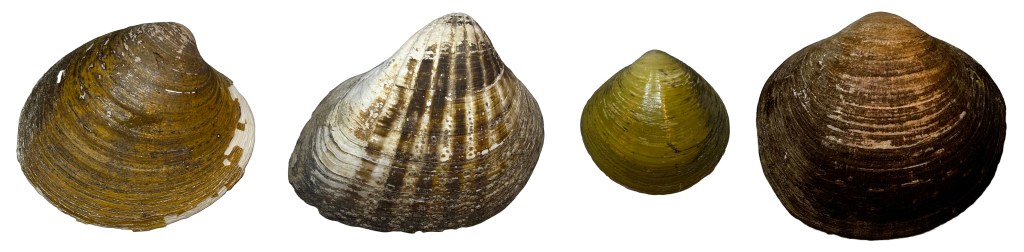
My main projects at the moment:
1) Verifying that temperatures derived from dual clumped isotope measurements reflect known growth temperatures for bivalves and whether there is any difference among layers of the same shell.
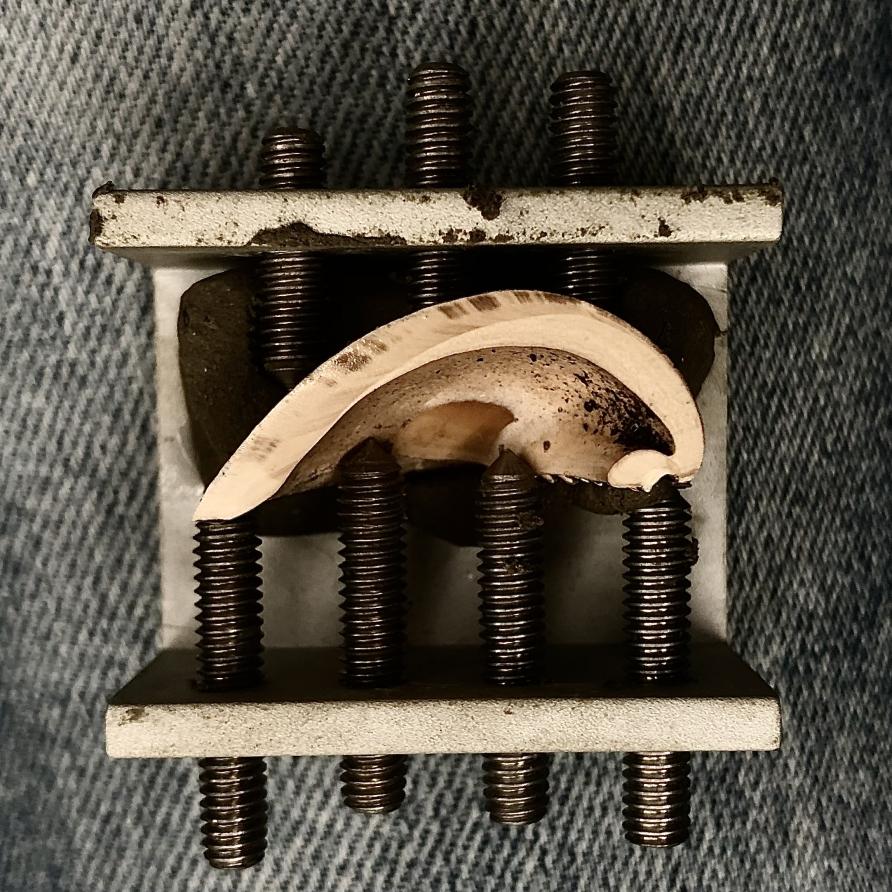
2) Identifying the best techniques for preparing bivalve samples for dual clumped isotope analysis.
3) Applying dual clumped isotopes to reconstruct paleotemperature and paleosalinity of the Persian Gulf during two understudied recent warm periods: MIS 7 (the penultimate interglacial) and MIS 3 (a turbulent interstadial within the last ice age). I’m finally working on giant clams!
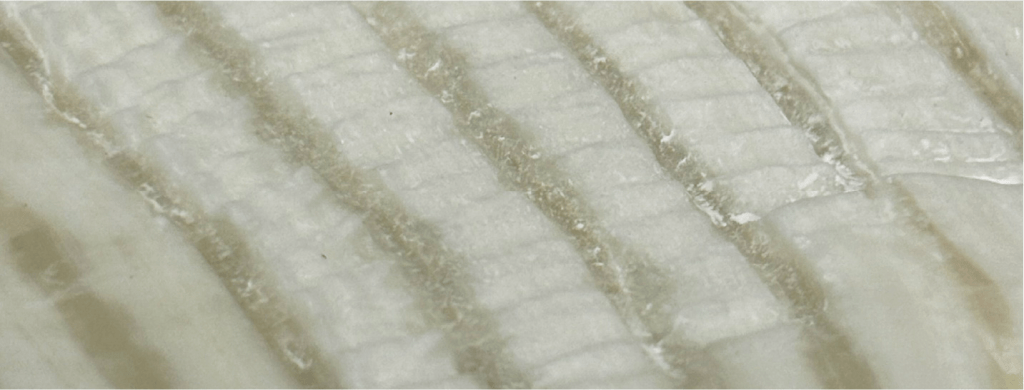
My MS thesis student is also working on his own project looking at kinetic effects in land snails using dual clumped isotopes, the first study of its kind!
Three core foci of my research
Paleoclimate
Understanding climate change through the millennia gives us insight into what makes Earth’s dynamic climate system tick. I am especially interested in past greenhouse worlds that can be used as analogs for future global warming.
My main paleoclimatological tool is dual clumped isotope geochemistry. This provides empirical paleotemperature estimates based on the thermodynamics of bonding between multiple “heavy” isotopes of carbon and oxygen in a carbonate. With this temperature estimate, we can also reconstruct the isotopic composition of water bodies, which contains a lot of information about salinity, circulation, water cycling, and topography. I like to stay on the cutting edge of our paleoclimate methods, so I’m starting to incorporate dual clumped isotope analysis in my work.
The precision work of high-resolution sampling (both for dual clumped isotopes and bulk oxygen and carbon isotopes) is an exciting way to get at paleoseasonality and animal life cycles. A big question on everyone’s mind is how the modern biosphere is going to react to continued global warming, especially in a “worst case” scenario. Reconstructing paleoclimate variability on a fine scale gives a fuller picture of what kinds of extremes are possible in the future. Furthermore, matching paleoclimate record to changes in the fossil record can inform what kinds of threshold conditions various species can tolerate.
Paleobiology
Beyond reconstructing climatic variables, I want to learn how marine life adapted to life in warmer worlds. Focusing on transitional periods like the Cretaceous-Paleogene boundary allows me to assess what factors correlate with survivorship in the face of great change.
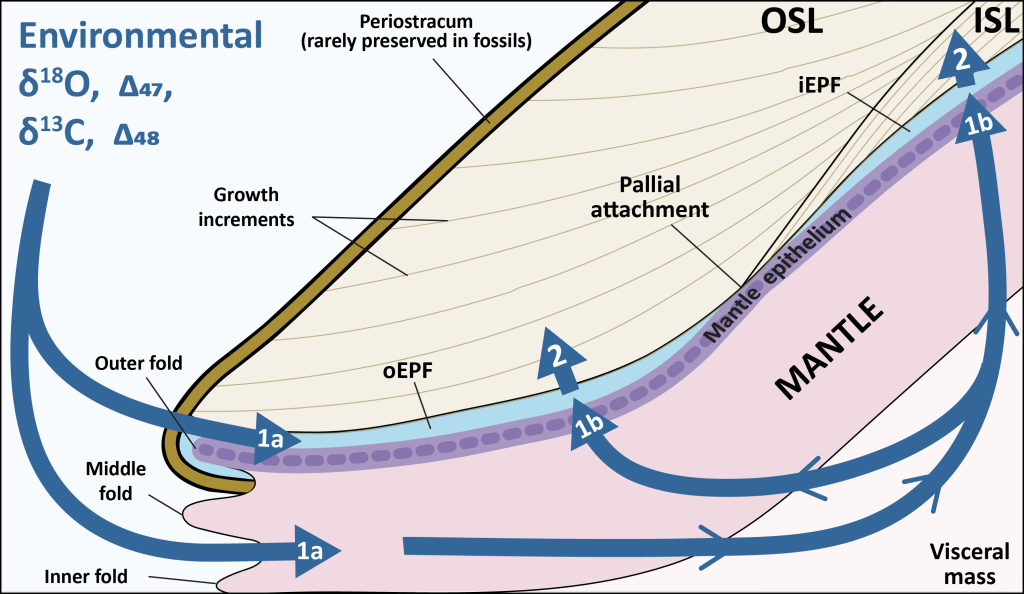
I am developing new methods and theory to identify “biologically driven isotopic fractionations” (BioDIFs), which preserve otherwise inaccessible aspects of bivalve physiology for millions of years. In February 2023, I published a synthetic review explaining the links we have found thus far between isotope geochemistry and biomineralization in fossil bivalves. This is a newly emerging field and there is still everything to learn!
Historically, geochemists have avoided sampling shells whose isotopic composition has been determined by anything other than water chemistry. Now, I’m deliberately seeking out these biological effects so that I can start to unravel the physiological story archived in the shell. What are the fractionating mechanisms, and when do fractionations occur during shell formation? How diverse actually are BioDIFs among bivalves, and how do they vary across the family tree? Why does preliminary work show that species with quite large physiological effects achieve better outcomes?
These are complex questions, and I have to throw a whole suite of methods at them to get a holistic picture: Dual clumped isotopes, scanning electron microscopy, X-ray diffraction, morphometrics, and more.
Fieldwork & Collections
The fossil record is a non-renewable resource, so I leap at the change to make good use of existing natural history collections. However, archival records are imperfect and the contextual information you can get from in situ collection can be invaluable to reconstructing a bigger picture. Both are useful!
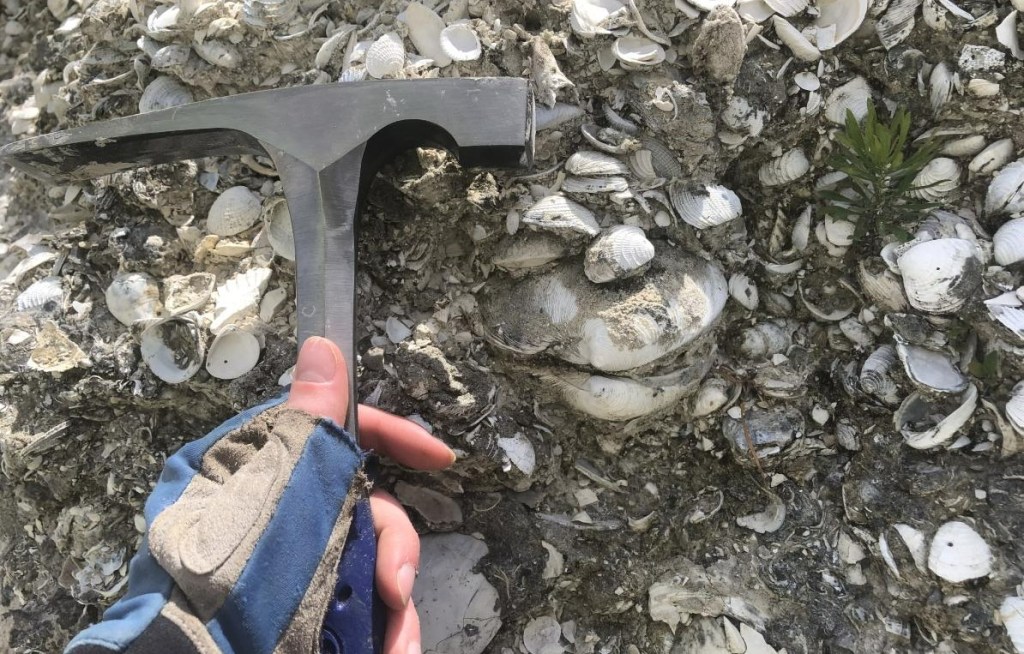
I’ve had a wide variety of field experiences throughout my career: from scrambling along scree slopes in Arizona to reach turquoise deposits, to measuring section and collecting fossils from quarries, to several weeks off grid mapping glaciers in the High Arctic. I’ve worked on samples from the Smithsonian National Museum of the American Indian, the University of Michigan Museum of Paleontology, the University of Michigan Museum of Zoology, and in 2023-24 was a resident predoctoral fellow at the Smithsonian National Museum of Natural History.
As a discipline, the Earth sciences need to reckon with a history of colonialism and white supremacy that affects our fieldwork and archival work. During these field experiences, my collaborators and I took steps to engage local communities. My undergraduate work in the Southwest built on a preexisting relationship between my mentors and local Native American communities. Some historical information contextualizing my Arctic fieldwork was provided by the Nunavut Archives Program, and we in turn shared our results with them. This is an area where I can continue to learn, and I know that there are always better efforts to be made.

 Dr. Allison Nicole Curley